#Software Methodology
5 posts
-
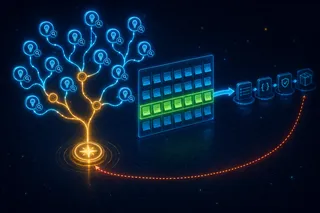
A Practical Guide to Agile Part 7 (Discovery): Where Do User Stories Come From — From Problem to Story
If Part 6 was delivery (user story to release), Part 7 is the discovery that comes before it. User stories don't fall from the sky — they're the output of problem definition (JTBD), user research and personas, value hypotheses (Lean Startup), impact mapping and the Opportunity Solution Tree, theme/epic/feature breakdown, and the story mapping that bridges discovery and delivery. The discovery installment that closes the series with dual-track Agile.
-
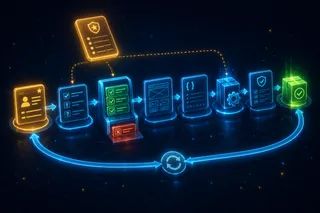
A Practical Guide to Agile Part 6 (Hands-On): From User Story to Release — One Lap of the Delivery Flow
If Parts 1–5 were the concepts (the why and what), Part 6 shows the order they actually run in. From user stories (As a/I want/so that, INVEST) to acceptance criteria (Given/When/Then), MoSCoW/story points/MVP, lo-fi wireframes, spec-first APIs, acceptance-criteria-based QA (ATDD/BDD), the event storming decision, and release — mapping each step back to Parts 1–5. The hands-on installment of an Agile series.
-
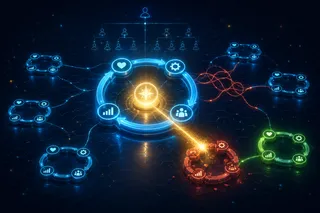
A Practical Guide to Agile Part 5: Scaling and Fake Agile — Why It Breaks and How to Recover
The destination of the series. What gets hard when you scale beyond one team to many (SAFe, LeSS, Spotify, Conway's Law, the scaling paradox), how the decay signals from Parts 1–4 harden into 'fake Agile' (cargo cult, the Agile Industrial Complex), and how to recover. Agile is not a toolset but an inspect-and-adapt learning loop — Part 5 of an Agile series (finale).
-

A Practical Guide to Agile Part 2: Scrum — Empirical Process Control and the 3-5-3
Why is Scrum shaped the way it is? Starting from empirical process control (transparency, inspection, adaptation) — what works when uncertainty is high — through what problem each piece of the 3-5-3 (3 roles, 5 events, 3 artifacts) solves, the meaning of Definition of Done, the Scrum Guide 2020 changes, and the signs of the daily turning into a status report and the sprint into a mini-waterfall. Part 2 of an Agile series that explains the why, not the ceremonies.
-

A Practical Guide to Agile Part 1: Why Agile Emerged — Manifesto · 4 Values · 12 Principles
Agile is not a methodology — it is a value system. From why waterfall broke down (late feedback, the cost-of-change curve) to the 2001 Agile Manifesto's four values and twelve principles, and the five most common misconceptions ('no docs / no planning / just go faster') — Part 1 of an Agile series that explains the why, not the vocabulary.